What is Stealth, and how does it work?
Stealth is the technology that makes aircraft nearly invisible to detection systems like Radar and Infrared, serving as a vital necessity for survival and mission success in modern warfare. To achieve this, an aircraft must minimize its ”signatures” by cooling hot exhaust gas through cold air mixing or hiding engine nozzles to reduce Infrared visibility, and lowering its Radar Cross-Section(RCS)—the electromagnetic measure of how detectable an object appears on radar—to evade enemy tracking.
Dropping RCS: Geometric Stealth, “Deflection”
The primary goal is to deflect radar waves away from the source. It can happen throughout,
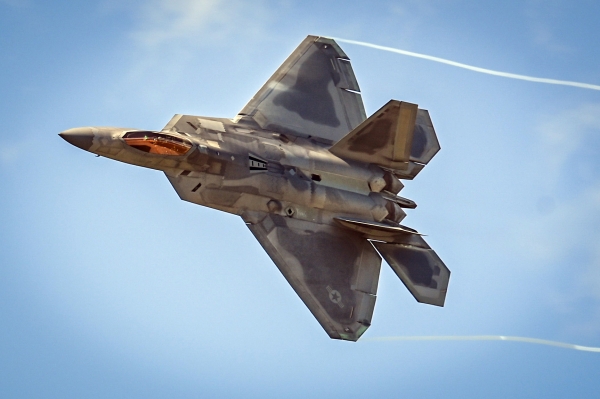
1. Platform Alignment
Aligning the edges of the wings and tail surfaces to a few specific angles. This concentrates the reflected energy into narrow spikes, making the aircraft nearly invisible from most other angles.
2. Faceting vs. Continuous Curvature
Early designs, such as F-117 used flat panels(Faceting) due to the lack of computing power. However, modern stealth uses Continuous Curvature to diffuse radar waves.
3. S-Duct Intakes
Since Engine fan blades are highly reflective to radar, stealth aircraft use an S-shaped duct to hide the blades from direct radar exposure.
4. Canted Vertical Tails
Angling the tail fins away from the vertical avoids bouncing signals directly back to the radar.
Dropping RCS: Materials, “Absorption Strategy”
Radar Absorbing Materials(RAM) act as an energy sponge, trapping radar waves within the coating and converting them into a tiny, harmless amount of heat. Some ingredients, such as Carbon(which conducts electricity) or Iron particles, are used.
Kim Jung-su(ST Reporter)
jungsutudy2160@soongsil.ac.kr