As Arctic ice melts, Greenland is no longer an isolated island. It stands at the center of international competition over resources and shipping routes. Greenland, the world’s largest island at 9.8 times the size of the Korean Peninsula, forms Denmark along with the Faroe Islands and mainland Denmark, situated between the North Atlantic and Arctic Ocean north of Canada. Approximately 56,000 to 57,000 people live in Greenland, using Kalaallit Nørrut (or Greenlandic), a variety of the Inuit language, as its official language. After the Inuit migrated from the west around 2000 BC, the Viking explorer Eric the Red from Iceland settled in southern Greenland in 982 AD and established a colony, marking the beginning of Greenland’s colonization. Today, under the Greenland SelfGovernment Act enacted in 2009, Greenland exercises nearsovereig authority over domestic affairs such as education, healthcare, and resource management, with autonomy granted in all areas except defense and foreign affairs.
Greenland possesses significant reserves of rare earth elements, oil, natural gas, and other resources, rapidly increasing its strategic value in the 21st century. Rare earth elements, comprising 17 elements including the lanthanide series and yttrium on the periodic table, occur naturally in mineral form. They are essential resources for advanced technologies such as various smart devices, electric vehicle batteries, semiconductors, and the defense industry: one iPhone contains about 0.24 g, while one nuclear submarine contains about 4.2 tons. According to the U.S. Geological Survey, Greenland holds approximately 1.5 million tons of recoverable rare earths as of 2024, ranking eighth globally in reserves after the U.S. China holds the largest reserves at approximately 44 million tons. Meanwhile, due to the complexity of refining rare earths from mined ore, China, with its relatively lax environmental regulations, has handled 85% of global rare earth refining. However, pressured by China’s rare earth export controls in early October 2025, which impacted its high-tech and defense industries, the United States aims to reduce its dependence on China by acquiring Greenland. This move seeks to protect American manufacturing and defense industries, revive the rare earth refining and processing sector, and achieve self-sufficiency in the rare earth supply chain.
The Arctic shipping route through Greenland is also gaining economic prominence as Arctic sea ice retreats. The Arctic Sea Route is divided into the Northwest Passage and the Arctic Ocean Route. The Northwest Passage, not yet fully developed, is a trade route connecting the Atlantic and Pacific Oceans via Canada’s Arctic Archipelago. Compared to the Suez Canal, the traditional core route for Asia-Europe maritime trade, the Northwest Passage can shorten the route by approximately 30-35%. The Arctic Ocean route, however, is operated almost exclusively by Russia due to its claims over its territorial waters and exclusive economic zone. There are predictions that if the United States, which has previously been unable to freely use the Northern Sea Route, establishes a foothold in Greenland and controls the route’s entrance, it could secure dominance in Asia-Europe trade while also achieving resource acquisition in Greenland and expanding its military influence.
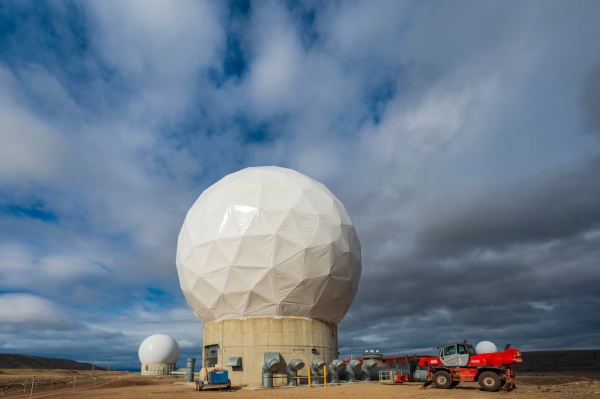
Another reason Greenland has emerged as a primary point of international politics is its geopolitical location. If Russia were to launch an Intercontinental Ballistic Missile(ICBM) towards the U.S., the shortest trajectory of that nuclear missile would cross the Arctic and Greenland. In other words, Greenland is the most effective position for the U.S. to detect ICBMs. During World War II, the U.S. military established multiple communication bases across Greenland. Even after the war, they remain at the Thule Air Base, now known as Pituffik Space Base, in the Qaanaaq District. Also, thanks to its high latitude, Greenland gives an advantage in monitoring potentially threatening satellites or space debris. If the U.S. were to secure observational coverage of Polar Regions, it would greatly assist the low-Earth-orbit satellite network project that the U.S. Space Development Agency has been working on since 2019.
Greenland is also central to maritime security in the North Atlantic. Due to its location at the northern edge of the Greenland-Iceland-United Kingdom Gap, it plays a critical role in monitoring and blocking the movement of Russian naval forces seeking access into the Atlantic Ocean. For such reasons, the U.S. has shown ambitions to manage Greenland as a long-term sovereign territory. Historically, the U.S. has attempted to purchase Greenland several times, in 1867, 1946, and 2019, but to no avail. Even now, president Donald Trump shows consistent interest stating that Greenland is “needed for national security purposes,” However, Denmark, which currently governs Greenland, holds a different position. As a longstanding member of the North Atlantic Treaty Organization, Denmark opposes any annexation attempts by the U.S., arguing that military use of Greenland counters its autonomy and the opinions of its residents.
Greenland is now a gamechanger, attracting the attention of global leaders and entrepreneurs. Meanwhile, the international community views Greenland as a potential supply chain for rare earth elements and as a technological hub for overcoming climate change. In this context, South Korea must also analyze the trend of this global resource competition and develop response strategies. Otherwise, South Korea may have no choice but to become dependent on frameworks designed by other nations.
Seo Jun-hee(Web Editor)
20231933@soongsil.ac.kr
Jung Ah-in(ST Cub-Reporter)
ahinjung@soongsil.ac.kr